Take a breath. Most no-starts are simple, and panicking helps nothing. Work this calm 5-step triage — it solves half of them and tells us exactly what to bring for the other half.
Step 1: Listen to what it does
- Rapid clicking: almost always a weak battery or corroded terminals.
- Single loud click: often the starter itself.
- Cranks fine but won't catch: fuel or spark issue — stop cranking after 10 seconds to save the starter.
- Total silence, no dash lights: dead battery, bad connection, or a blown main fuse.
Step 2: Check the obvious
Is it in Park (or clutch fully down)? Steering wheel locked hard against the stop? Key fob battery dead — try holding the fob against the start button. These embarrass everyone equally; check first.
Step 3: Look at the terminals
White or blue crust on battery terminals can block enough current to silence everything. If you have gloves and a wrench, snug the clamps. Don't hammer them — cracked battery posts leak acid.
Step 4: The safe jump-start
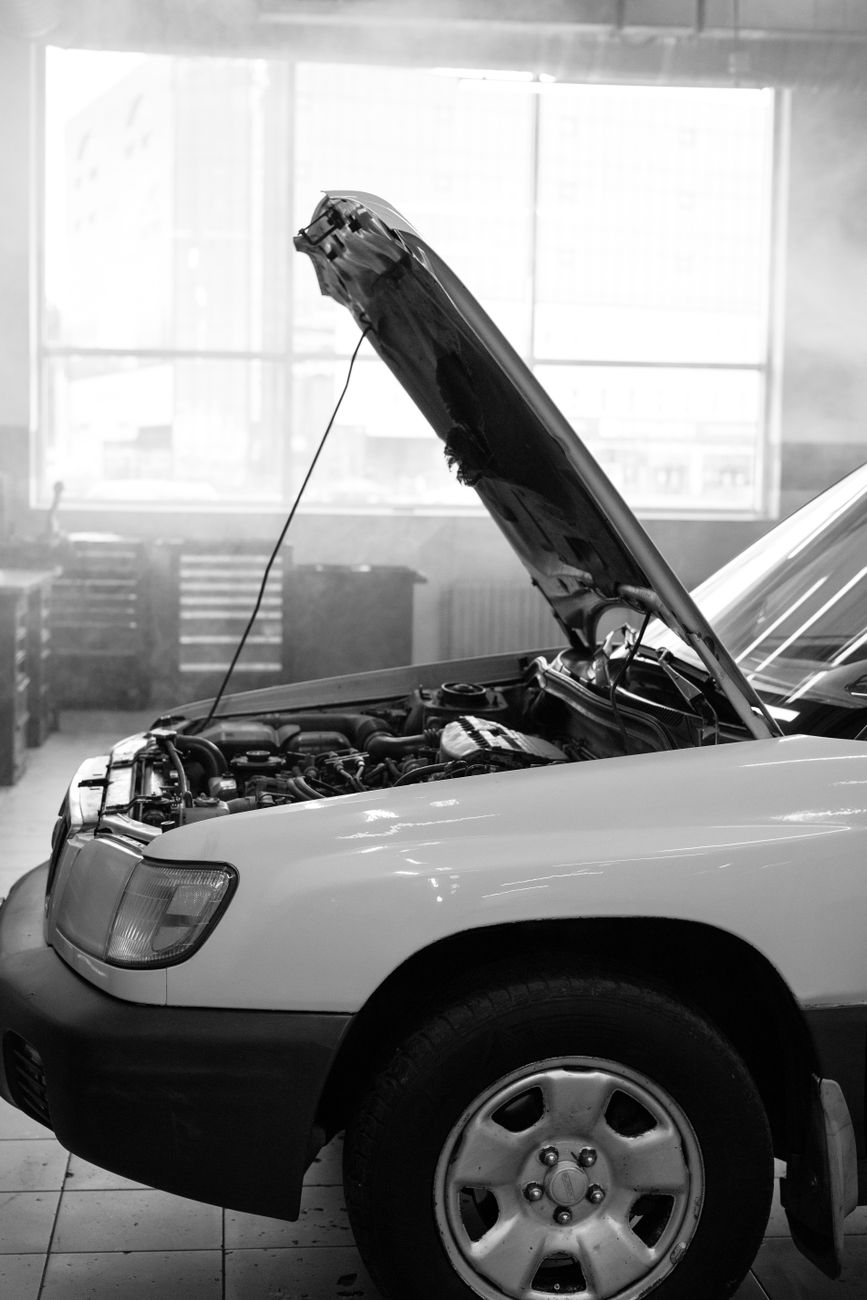
Good cable order: dead positive, donor positive, donor negative, then bare metal on the dead car — never the dead negative post. If it starts, drive 20+ minutes and get the battery tested free the same day.
Step 5: When to call us instead
Smell fuel, see smoke, hear grinding, or the car died while driving — don't keep trying. Call (555) 214-7788 and describe the sound from Step 1. We'll tell you honestly whether it's a jump, a tow, or a same-day battery.